A mint protected valuable metal; a hotel welcomes people and supports their comfort. Conversion brings those priorities into the same building. The outcome should be judged through circulation, services and retained evidence, not simply through the richness of the furnishings. An old industrial enclosure can become an exceptional place to stay, but its age alone does not establish the quality of the intervention.
Begin at the threshold
Entrances reveal how a project negotiates security and welcome. An old gateway may survive as the principal arrival point, or it may become a feature beside a new accessible entrance. Neither arrangement is inherently superior. What matters is whether guests understand where to go and whether those who need an alternative route receive an equally dignified arrival.
Heavy doors, stone steps and narrow openings are material evidence, but they cannot be treated as reasons to ignore safe circulation. Ask about the actual route from street to reception and from reception to your room. Photographs of a historic entrance do not establish that every guest must use it, and a photograph of a lift does not prove that the entire route is step-free.
Separate fabric from atmosphere
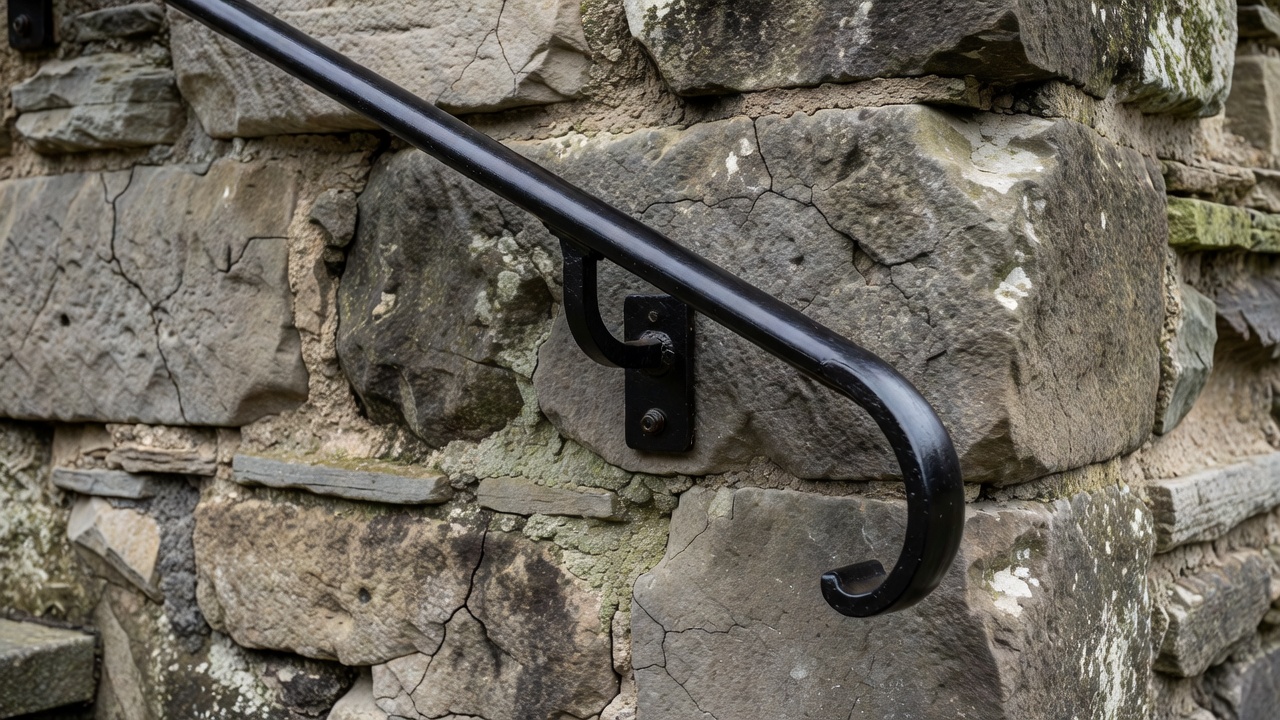
Exposed masonry can be historic, repaired, newly uncovered or newly installed. Ironwork can be original to the building or introduced to evoke an industrial mood. These distinctions need not become a test of visual purity. Good new work can be both beautiful and appropriate. The problem arises when a decorative choice is presented as evidence of a specific former operation.
Look for clear explanations rather than a universal claim that everything is original. An architect's account may identify which walls were retained, how courtyards were reopened and where new bedroom floors were inserted. Conservation guidance from bodies such as ICOMOS and Historic England offers useful vocabulary for discussing significance and adaptation, although neither organisation's general guidance certifies a particular hotel's project.
La Rochelle as a focused enquiry
Hôtel de la Monnaie Art & Spa in La Rochelle is a relevant lead within this unusually narrow accommodation theme. Its published identity connects hospitality, contemporary art and a former mint setting. A useful assessment asks how that identity is expressed in the spaces a guest actually occupies, rather than assuming that the whole present establishment is an untouched coin-production facility.
Start with the property's own description, then consult La Rochelle's municipal records and the French Ministry of Culture's heritage resources for the historical site. Ask the hotel which current areas occupy older fabric, what interpretation is available and whether the room category you are considering is in a historic or later part. This guide does not provide an inspection report, a star-rating audit or current availability for the property.
The same restraint prevents false additions to the category. Hôtel de la Monnaie in Paris is the name of a major mint building, not evidence of a hotel conversion. Royal Mint Court in London should not be advertised here as bookable accommodation merely because the name contains a former royal mint association. A short, carefully delimited category is more useful than a long list assembled from similar names.
Follow the hidden services
Bathrooms, ventilation, drainage, fire protection and electrical systems often require the most consequential changes. A calm interior can conceal extensive engineering. Ask practical questions about air conditioning, bathroom extraction and room controls rather than assuming that thick walls automatically deliver comfort. Historic construction may moderate some conditions while making other interventions more difficult.
Noise deserves the same care. Hard finishes and enclosed courts can reflect voices, while new plant may introduce a separate source of disturbance. A room overlooking a beautiful courtyard can differ significantly from one facing a street or an internal service zone. These are room-specific matters, not inevitable failings of old buildings. Request an answer tied to the precise category and location you intend to book.
Value legibility over theatricality
A former mint need not preserve a complete production line to retain significance. An intelligible plan, a documented threshold or a carefully explained foundation can carry more meaning than a collection of unrelated coins. Interpretation is strongest when it distinguishes surviving evidence from reconstruction and tells guests when a particular room's historic use is unknown.
The best outcome is not maximum exposure of old material at any cost. Historic plaster, later alterations and ordinary working spaces can be important too. Judicious concealment may protect fabric, and a clearly modern addition may avoid confusing the historical record. Evaluate the conversion through its explanation and its performance: can you understand the old building, and can you comfortably inhabit the new one?
Further context
- Hôtel de la Monnaie Art & Spa — consult the property directly for its history, facilities and room categories.
- ICOMOS — conservation principles and international heritage context.
- Historic England advice — comparative guidance on understanding and adapting historic buildings.